Self defined, strength forward disclosure
Insight Badge puts the person in control of their story. Employees choose what to share, focus on strengths, and give colleagues simple guidance on how to support them in everyday collaboration.
Co created with the community
Six interviews with employees with ADHD and autism plus conversations with Specialisterne, the Autism Association, and a neuroinclusion specialist informed the direction. A hands on workshop at ITU turned insights into actionable ideas through statements, theme clustering, and the 6–3–5 method.
Chosen through comparative evaluation
We explored three concepts and evaluated them against prioritized user needs. Insight Badge emerged as the most impactful and broadly adoptable, especially when refined for privacy controls and clearer language to reduce stigma.


Designing for neurodivergence at workplaces
Process
Research and co-creation
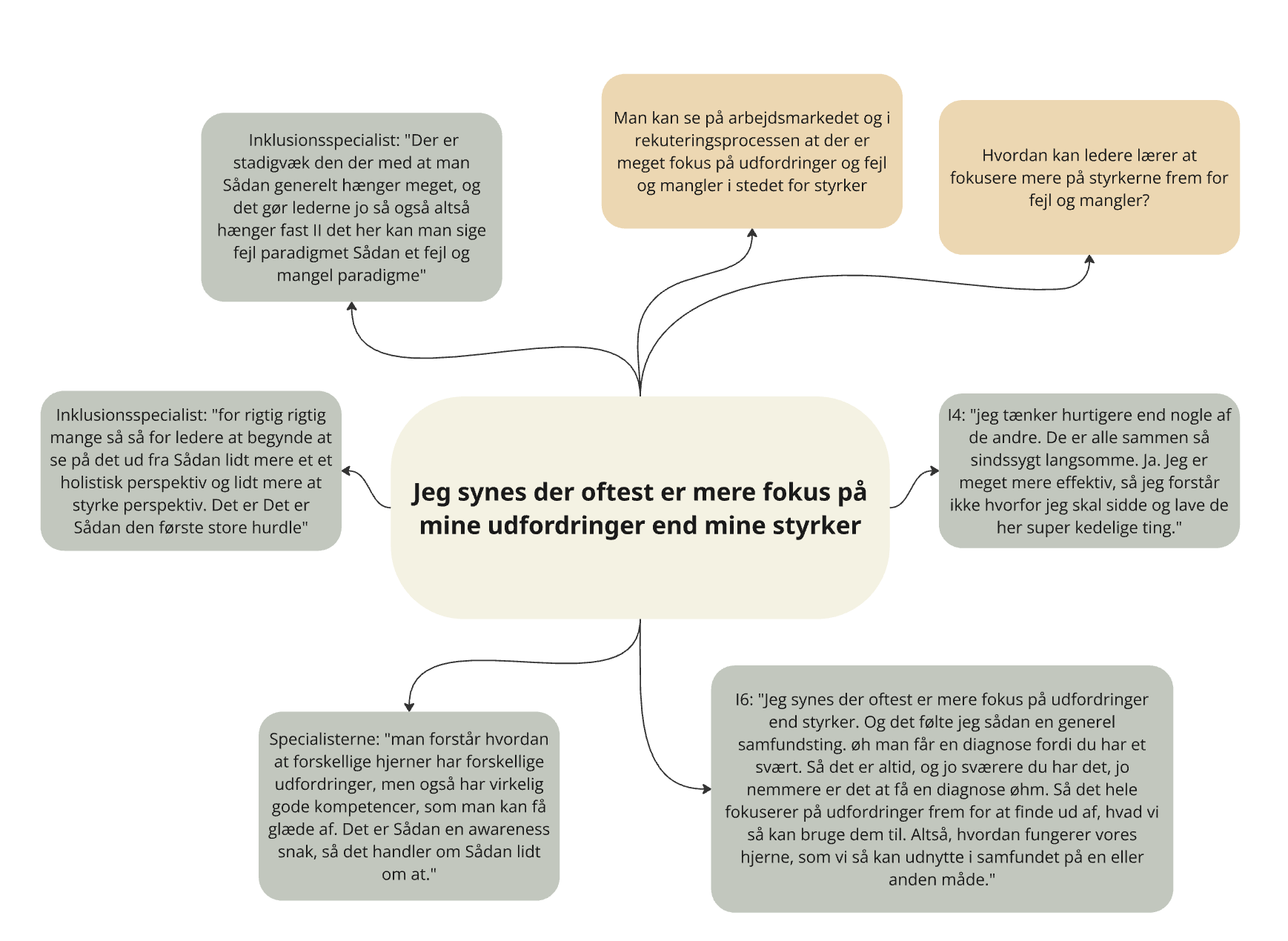
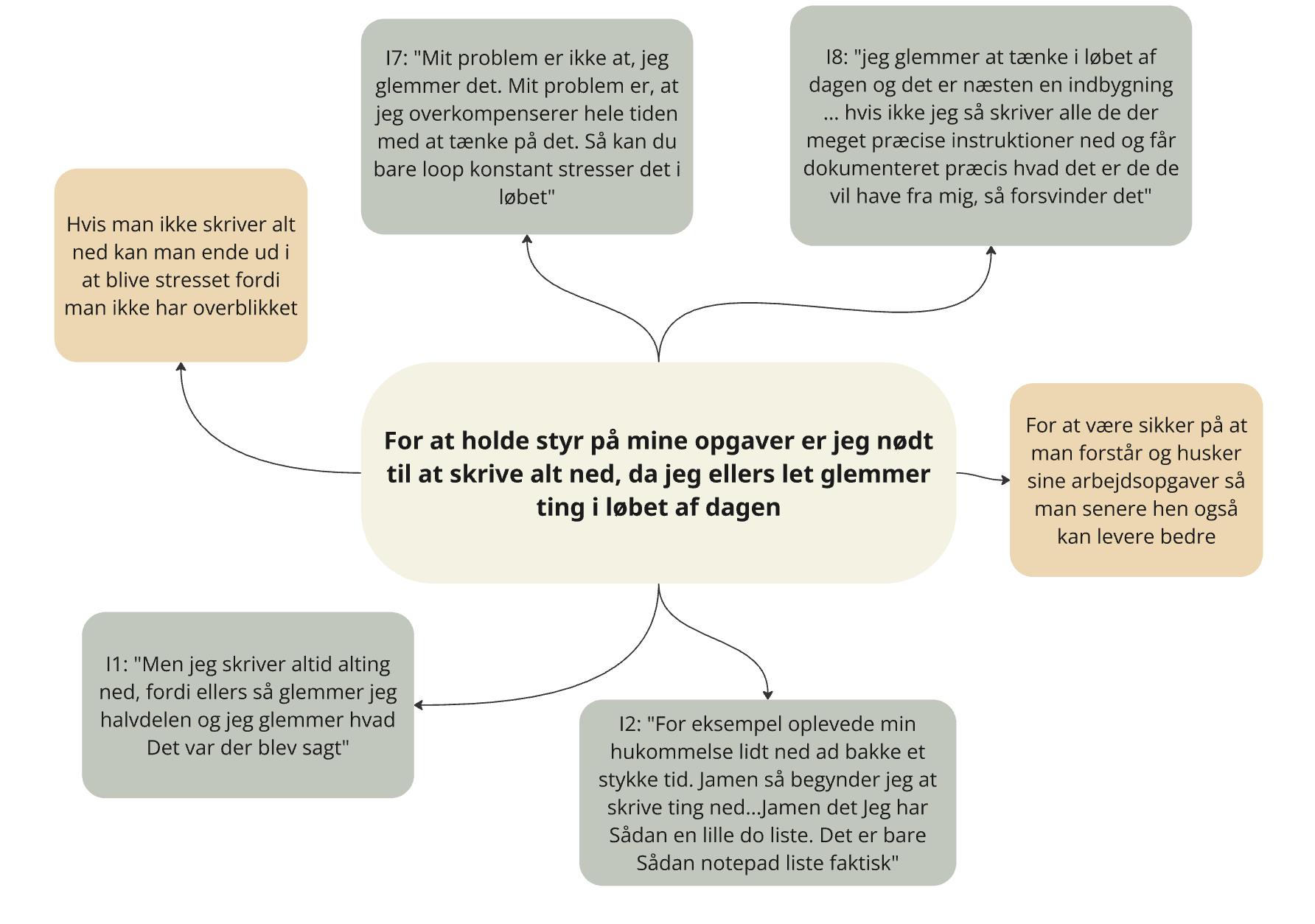
We interviewed employees with ADHD and autism and consulted domain experts to understand lived experiences, language, and support needs. At ITU we ran a workshop with eight participants. The session moved from shared statements about neurodivergence to group themes, then rapid idea sketching using the 6–3–5 method, and finally future casting where ideas were tested in imagined work situations. This produced a rich backlog of needs and opportunities.
Concept development
From the insights we framed four design openings
• Communication between manager and neurodivergent employee is often insufficient
• Invisible work drains energy and remains unseen
• Social expectations at work can be hard to navigate
• There is limited understanding of neurodivergence and too little focus on strengths
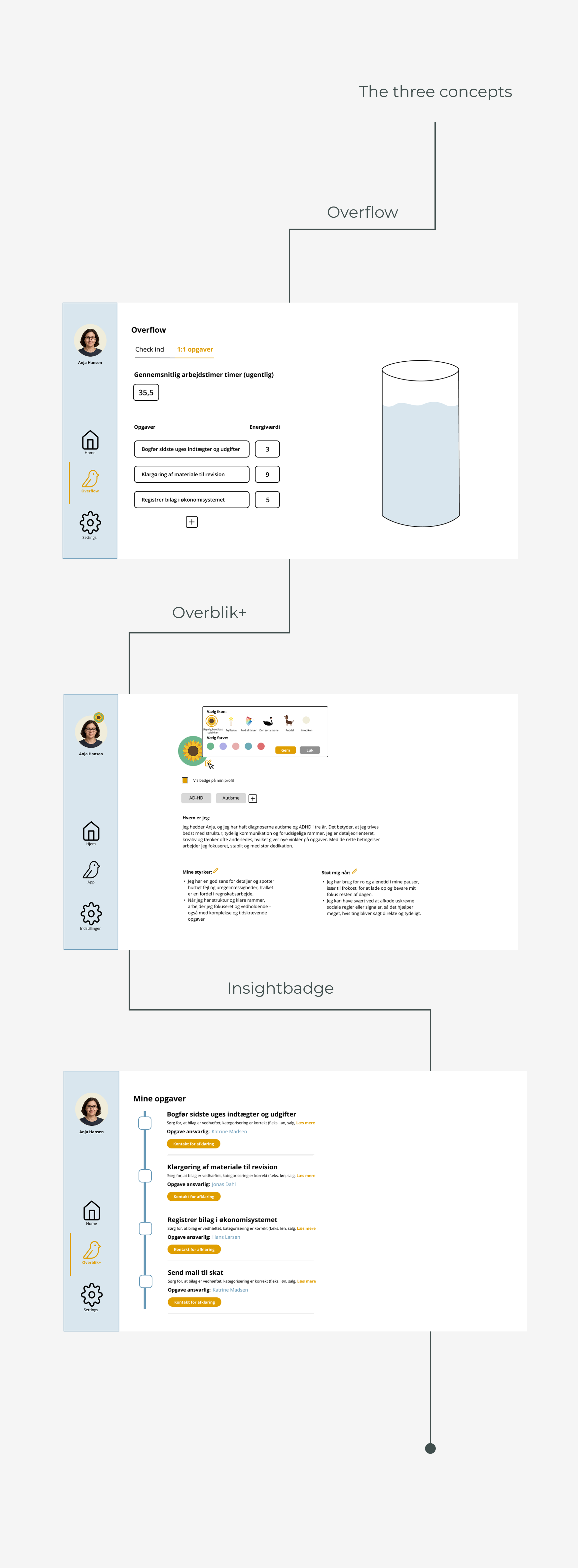
We then shaped three concepts
Overflow visualizes workload and energy through two cups for one-to-ones, prompting reflection and better follow up.
Overblik plus gives employees and managers a shared view of tasks and an easy path to the responsible contact.
Insight Badge lets employees define who they are, what they are great at, and how to support them, with an optional badge on the profile.ensured that our recommendations addressed both environmental engagement and practical needs.
Evaluation and selection
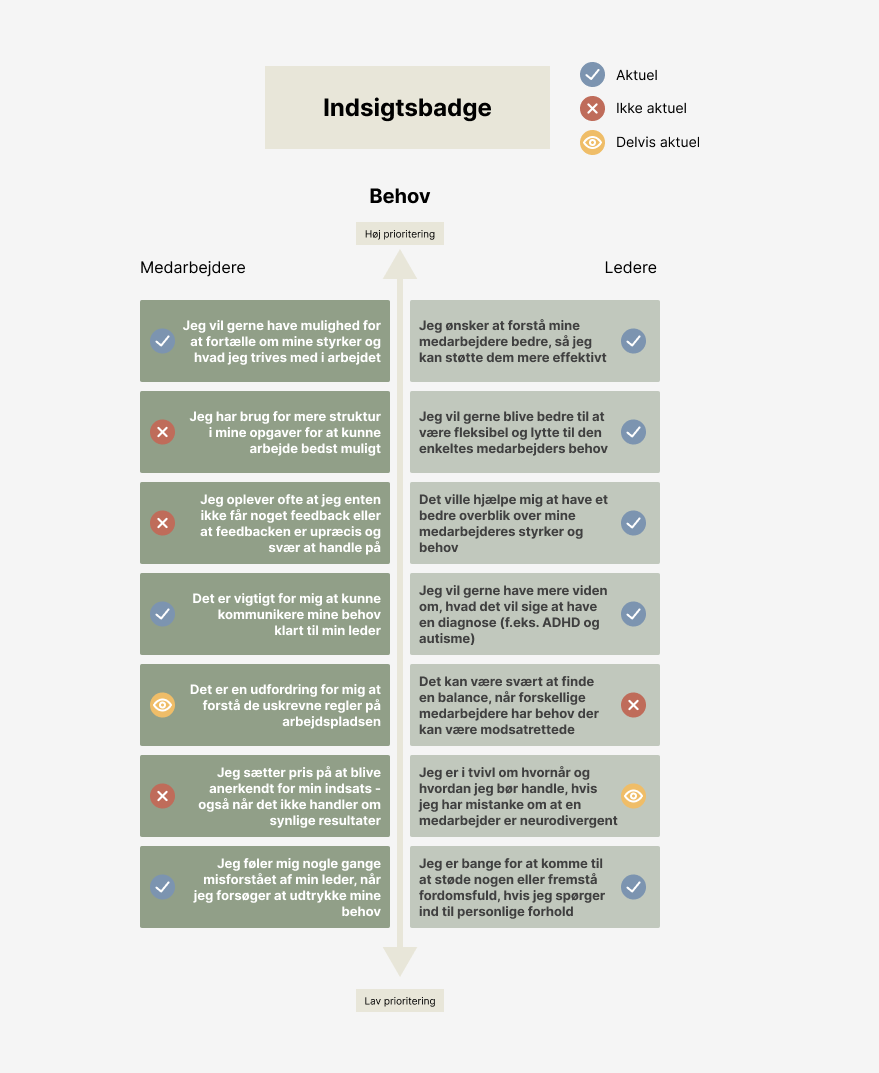
To evaluate our concepts, we conducted a test session with both employees and leaders, where we asked participants to prioritize and rank different user needs identified earlier in the process. These needs were then visualized through need meters, which provided a clear overview of how strongly each concept addressed the most important challenges.
By comparing the concepts against these scales, we could systematically assess their potential impact:
- Overflow was seen as valuable for structuring one-on-one conversations and creating reflection but raised concerns about complexity and fit.
- Overblik+ was recognized as easy to understand and directly connected to existing practices, but risked overlapping with tools already in use.
- Insight Badge stood out as the concept with the greatest relevance, addressing the widest range of needs while empowering employees to communicate their strengths and support preferences.
The use of the need meters allowed us to move beyond subjective impressions and anchor our evaluation in a structured comparison across user priorities. This revealed where concepts overlapped, where they fell short, and ultimately guided the selection of the final solution.
Final iteration
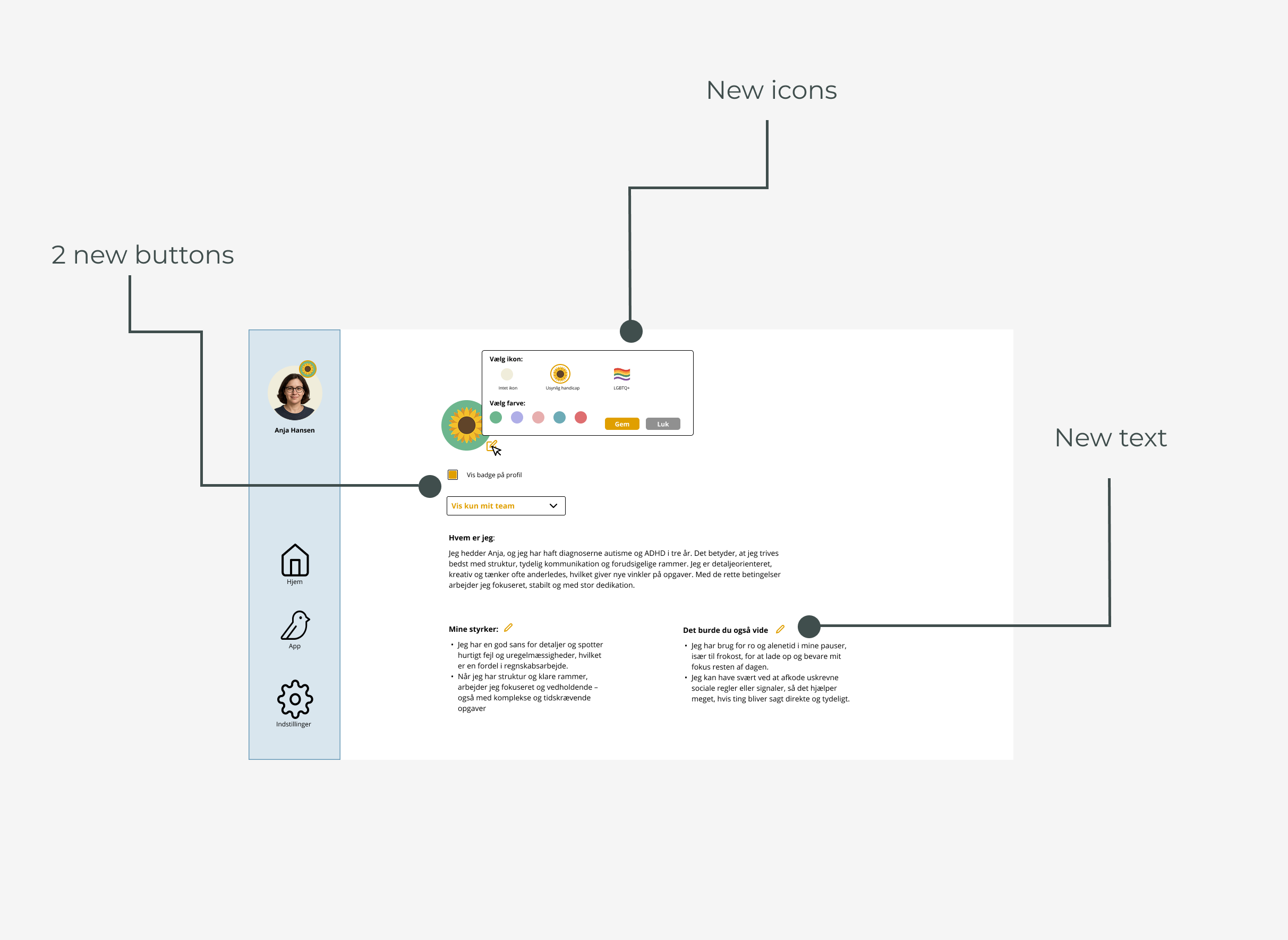
We reduced exposure and increased agency.
• “Support me when” became “You should also know” to avoid framing needs as weakness
• Diagnosis tags were removed and replaced with audience controls so employees can choose who sees their profile information
• Iconography was refined with inclusive symbols and clearer semantics
The result keeps ownership with the individual, encourages curiosity and understanding among colleagues, and provides a practical first step toward a more inclusive culture. It also lays the groundwork for later structural solutions that address tasks and workflows.